7 Books to Check Out: New Titles by Tucson Writers

It’s a new year, but don’t miss these books released by Tucson authors in 2025!

undersea mural
Mural by Jessica Gonzales on the side of Antigone Books, Tucson

Order, order!

I’ve included links to order via Bookshop.org, but you can also check your favorite local bookstore.

Fun fact: Most bookstores that sell new books can order just about anything in print, whether they carry it or not. If they don’t have an online shop, call or stop in.

Find an independent bookstore near you. Or order from any of the ones listed below.

If you prefer to browse in a brick-and-mortar shop, I’ve listed independent Tucson- and Phoenix-area bookstores that say they have a particular title in stock. (I didn’t bother which stores you can order these books from, because the answer is any of them.)

Barnes and Noble also had a few of these books available in certain stores, so you can check there if that’s the option closest to you.


Urban Trails Tucson book at a desert trailhead.
Via Trails Inspire / Sirena Rana

Book List

1. Urban Trails Tucson

by Sirena Rana

You may know the author from…

Her Arizona Trail advocacy, as well as her photography and writing about hiking and the outdoors.

About the Book:

This book is part of the Urban Trails series, published by Mountaineers Books. It’s a look at nearly 50 trails in Tucson and the surrounding areas. Each trail has a several-page description, along with maps and photos. Even before you get to those, there is tons of information about desert wildlife, Tucson culture, hiking tips, and local pronunciation. There’s a handy map and chart that will allow you to quickly find a trail based on location and length, as well as kid- and/or dog-friendliness.

Formats:

  • Paperback
  • eBook

Find it:

More:


Arizona Poppy Shop shelves
Sonoran Rosie book at Arizona Poppy

2. Seasons of the Desert: The Wellness Wisdom of Southwestern Native Plants

by Sonoran Rosie (Rosie Crocker), illustrations by Hannah Davies

You may know the author from…

Their desert plant-based skincare/self-care products and their artist spotlight in my all holiday market post. They are also the owner of Arizona Poppy Shop and founder of the seasonal Desert Air Market.

About the Book:

Divided into blooming seasons, this book helps you identify key plants and describes their place in the Sonoran desert ecosystem. It explains practical uses for each plant and how they can be responsibly foraged. goes beyond helping you simply identify desert plants, it describes their practical uses and even includes recipes for natural skincare, herbal remedies, and other goodies!

Formats:

  • Hardback
  • eBook

Find it:

More:


Pink Eraser Art book cover
Pink Eraser Art book by Serena Rios McRae aka Cactus Clouds Art

3. Pink Eraser Art: The Ultimate Guide to Carving Incredible Eraser Stamps

by Serena Rios McRae

You may know the author from…

Serena is a prolific artist in a wide variety of media. You may have spotted her ceramics, stickers, or watercolors at a local market, seen her murals at Hotel McCoy, or watched videos about her process and – often surprising – projects. And I’ve heard her DIY eraser stamps made a big splash on TikTok.

I also spotlighted her new book on my all holiday market list.

About the Book:

Carving stamps from pink rubber erasers is more than just the latest maker trend. It’s about democratizing art, about the freedom that comes with creating using what you have on hand – instead of being limited by expensive supplies.

“…using the less expensive materials is freeing, healing, and I believe will help us gain that confidence in ourselves that we need to trust our creativity.” –Serena Rios McRae


Pink eraser art stamped into a book by Cactus Clouds Art
By Serena Rios McRae / Cactus Clouds Art

Formats:

  • Paperback
  • eBook

Find it:

More:


Via Western Sky Communications

4. Water Harvesting 101

by Martha Jean Retallick

You may know the author from…

Her beautiful coffee table book, City Nature.


“Drought affects all of us. Whether you’re in the deserts of Arizona, the plains of the Midwest, or urban centers like Los Angeles and Atlanta, water resilience starts at home.”

–Martha Retallick

About the Book:

A practical companion to City Nature, this book goes deeper into the how-tos of creating a lush landscape in the desert. If you’re familiar with Rainwater Harvesting for Drylands and Beyond by Brad Lancaster, then you’ll be aware of concepts like shaping your yard to capture rainwater and reusing gray water. In this case, however, you have the addition of Martha Retallick’s nature photography with text that is informational, but much less dense.

water spouting from a garden hose
Image via Water Harvesting 101 Podcast / Martha Retallick.

Formats:

  • eBook
  • Audiobook

Find it:

More…


book: In the Circle of Ancient Trees: Our Oldest Trees and the Stories They Tell
In the Circle of Ancient Trees: Our Oldest Trees and the Stories They Tell via author Valerie Trouet

5. In the Circle of Ancient Trees: Our Oldest Trees and the Stories They Tell

edited by Valerie Trouet, art by Blaze Cyan

A follow-up to her previous book, Tree Story: The History of the World Written in Rings, this time Valerie Trouet has collected stories of trees from all over the world. She introduces the book by explaining the science behind studying tree rings, and then presents 10 stories from other dendrochronologists, each about a tree species that has been important in their work.

It is illustrated by intricate woodcarvings by Blaze Cyan, a British landscape artist who feels especially connected to ancient trees and forests.

Formats:

  • Hardback
  • eBook

Find it:

More:


6. 100 Western Women: The Bold, Brave, Gutsy Women of Arizona’s Past

by Jan Cleere

You may know the author from…

The monthly “Western Women” column she’s written for the Arizona Star for over a decade. This is her seventh book – and the fifth that focuses specifically on historical Arizona women and girls.

About the Book:

Each of the titular 100 western women gets a short, biographical chapter in the book. They are grouped into broad sections, such as Pioneers, Innkeepers, Educators, Military Wives, and “The Compassionate.” While it sometimes glosses over the more problematic aspects of the stories, there’s enough good information to make it worth the read.

Because each chapter is adapted from a self-contained article, you don’t have to read them in order. You can skip around or skim the table of contents for names that catch your attention.

Formats:

  • Paperback
  • eBook

Find it:


7. The Southwest Native Plant Primer: 235 Plants for an Earth-Friendly Garden

by Jack Dash, Luke Takata, Native Plant Society Arizona

“Habitat fragmentation is the global challenge that the average gardener has the greatest ability to help solve… Almost anyone can grow native plants and help knit together the fabric of ecosystems that have been torn apart by human activity.”

–The Southwest Native Plant Primer

The book is part of a series of Native Plant Primers by Timber Press. There’s also one for the Southeast, the Pacific Northwest, one just for Texas, etc.

This particular volume describes the diverse bioregions within the Southwest. Besides descriptions of 235 plants that are native to the region and commonly available, it also includes hints on topics like mulching and choosing annuals vs. perennials.

Formats:

  • Paperback
  • eBook

Find it:

More:


bookshelf
Urban Trails Tucson on the shelf at Mostly Books in Tucson.

Of course, these aren’t the only recent releases by Arizona authors. I found lots more at the Stacks Book Club local author list!


As an affiliate for Etsy and Bookshop.org, I may earn commission on purchases you make after clicking one of my links. It doesn’t cost you anything extra and helps support this site. Thanks!

“Frybread Face:” a Film about Family, Flocks + Defining Yourself

Benny on the bus. From the film Frybread Face and Me.

Imagine that you’re 12.

It’s the beginning of summer 1990, and you’re growing up in San Diego. You’ve got a Walkman, a neon green fanny pack, and annual passes to SeaWorld.

Then your mom effectively cancels all your summer plans when she tells you she’ll be sending you to stay at your grandma’s house on a sheep ranch in rural Arizona instead. [Record scratch.]

That’s the beginning of Benny’s story in the film Frybread Face and Me.


A hogan and mobile home in the desert. From the film Frybread Face and Me.

Welcome to the Rez

Benny, portrayed by Keir Tallman, is a sweet, Fleetwood-Mac-loving preteen, who marches to the beat of his own drum.

His Aunt Lucy drops him off at the home of his grandmother (played by Sarah Natani, who is a Navajo master weaver in real life, as well as in the movie).

Sarah Natani weaving. From the film Frybread Face and Me.

It’s the first time in years he’s been on the reservation, and it is a bit of culture shock for the city kid. Although he’s Navajo (Diné), he doesn’t speak the language and has grown up away from the traditions that weave their way into the life of many of his relatives.

Benny with his grandma. From the film Frybread Face and Me.

Grandma Lorraine only speaks Navajo. When it is just the two of them, her words are not subtitled. So unless you speak Navajo, you are as in the dark as Benny is.

His Uncle Marvin, who also lives on the ranch, speaks English but doesn’t have a kind word to say to Benny.

Benny with his relatives. From the film Frybread Face and Me.

Although Grandma Lorraine’s house is so remote that it doesn’t have running water or electricity, it is actually the hub that connects his extended family. It’s where they always return – especially in times of transition or difficulty.


Benny and his cousin. From the film Frybread Face and Me.

The City Cousin and the Country Cousin

Things begin to turn around for Benny with the arrival of his 10-year-old cousin (played by Charley Hogan), who everyone calls “Frybread Face.” Not only is she able to translate the Navajo language and culture for him, she can give him the scoop on their relatives, as well. The two cousins bond while working together to take care of sheep, fix fences, and find time to just have fun and be kids.

Frybread Face and Benny. From the film Frybread Face and Me.

Throughout the film, Benny is trying to understand who he is and how he fits into his culture and his family. He also learns that the adults don’t have it all figured out either.


"You need to learn to weave." From the film Frybread Face and Me.

Native American Heritage Continues

The film is beautiful with plenty of moments to both make you smile and to tug at your heart strings.

It was written and directed by Billy Luther, who is Navajo, Hopi, and Laguna Pueblo. While he has made documentaries (including the award-winning Miss Navajo) and television shows, this is his first feature film! It was filmed on location in New Mexico with shots that capture the wide open spaces and stark beauty of the high desert.

Frybread Face and Me is being released on Netflix and in select theaters today (November 24, 2023) in honor of Native American Heritage Day.

Frybread Face and Me film poster.


Film preview and photos courtesy of ARRAY.

Tohono Chul

Tohono Chul Patio

Crested saguaro at Tohono Chul

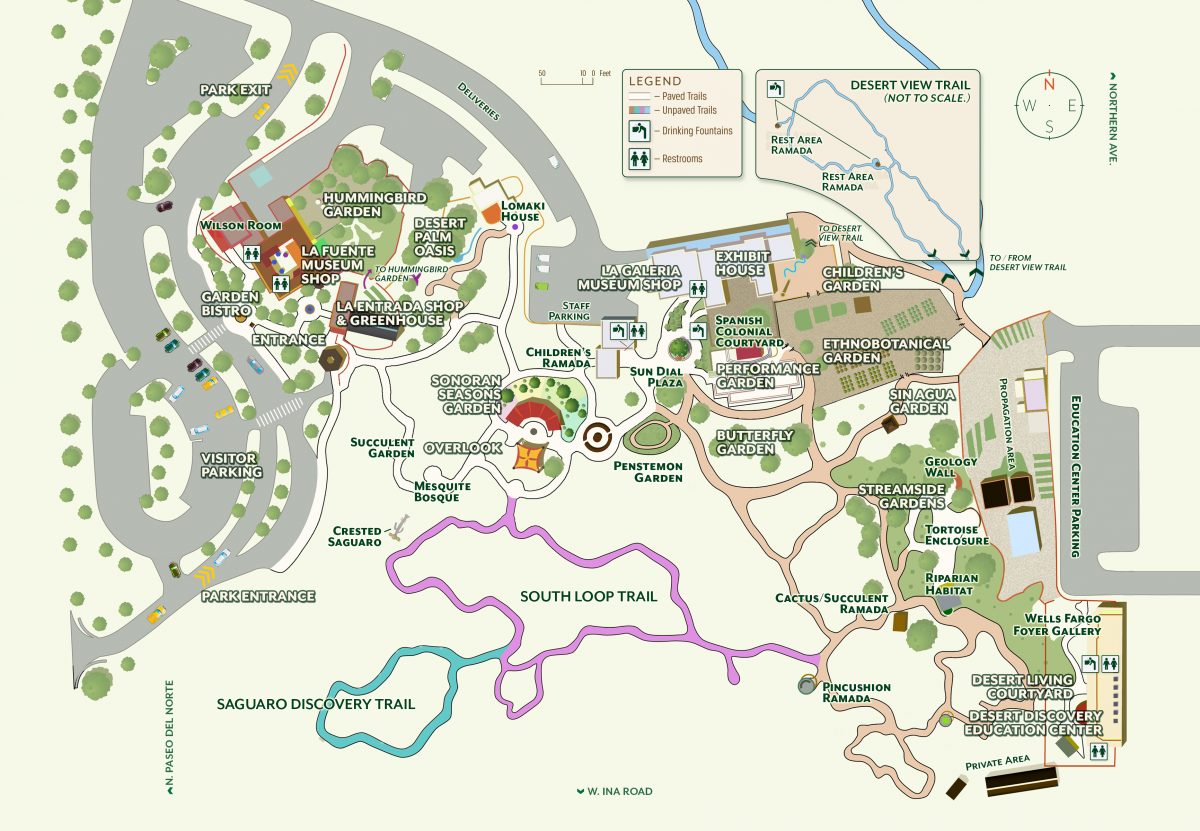
Tohono Chul is a nature preserve just north of Tucson. On its 49 acres, you can find art, shops, gardens, a bistro, and lots of paths winding through the desert.

Tohono Chul paths

A Desert Corner

The name comes from the words for “desert corner” in the language of the Tohono O’odham (“desert people”), who were the ancestral inhabitants of this region.

Bee habitat

I’d heard about this beautiful place from my Master Gardener uncle long before we moved to Tucson. For awhile I thought it was called “Tohono Jewel.” It is a gem of a place, so that fits too.

Phillip and I finally made it in there when my parents and their friends who were visiting from the Midwest decided to spend a day in Tucson.

Tree with Lucy’s Warbler Nestbox.

They drove down from Phoenix and met us at the entrance on a sunny morning in February 2020 – when we were all blissfully unaware what the next 12 months would bring.


I-10 freeway signs

Routes to Drive from Phoenix to Tucson

Tohono Chul is actually in a pretty convenient location for people making the trip south from Phoenix.

There are two main ways to get from the Phoenix area to Tucson:

1. I-10 Freeway (“the 10”)

  • 1.5-hour approximate drive time.
  • Quickest, most direct route.
  • Tohono Chul is about 15 minutes east of the 10 (exit at Ina Rd.)

2. Highways / Scenic Route (“the back way”)

  • 2.5-hour approximate drive time.
  • Slower, more interesting route through Florence to State Route 79 then to Copper Corridor Scenic Road (SR 77).
  • Tohono Chul is just west of SR 77, so this route practically drops you at its front door.


Large sculpture of a horned lizard.
“Regal Horned Lizard” by Dave Stone.

Art in Nature

Even though the sun was out, it was pleasantly chilly when we arrived. Many of the less cold-tolerant plants in the gardens were covered up because of a freeze warning, draped in sheets like furniture in an unused room of a Victorian mansion.

Cactus wren sculpture
Part of “Two Cactus Wrens” sculpture by Mark Rossi.

Of course, plenty of the cactus varieties there are unfazed by frost. For example, no one needs to cover 30-foot-tall saguaros. Which is good. They take care of themselves and tend to outlive us humans.

Friendly Crested saguaro

Which brings me to my favorite plant we saw that day: a friendly-looking crested saguaro! Crested saguaros have a rare mutation that causes them to fan out at top.

vulture sculpture by Kioko Mwitiki
“Standing Life-size Vulture” sculpture by Kioko Mwitiki.

While we didn’t go into any of the galleries, we did see several outdoor animal sculptures woven throughout the gardens, like a life-sized rusted metal vulture (by Kioko Mwitiki) and a much-larger-than-life horned lizard (by Dave Stone).

During the summer, it would be great to spend the morning exploring outdoor trails and then retreat into the galleries during the heat of the day.

Rock layers

There’s an outdoor geology wall that uses rocks from the nearby Santa Catalinas to illustrate the layers of stone under the mountains.

Moorish garden

The Desert Living Courtyard showcases several types of gardens you could DIY with plants that grow well here, including a moorish garden and a “barrio garden” that replicates a backyard garden space with art from upcycled materials. For each garden vignette, there’s a list of plants and materials you could use to recreate it.

El Charro

More Tucson Gems

After Tohono Chul, we ate lunch at the nearly 100-year-old restaurant El Charro. While there is a much closer location in Oro Valley, we opted to go to the original old building in Downtown.

It was the time of year where the Tucson Gem & Mineral Show® happens at the Tucson Convention Center. If you don’t have time for the massive, main show, you can get kind of a sampling at dozens of smaller gem shows that spring up around it.

Hub ice cream parlor

I knew that we’d be in walking distance of Hotel Tucson City Center, which had its own free, open-to-the public show with 300 vendors selling minerals and fossils on their property.

Before our guests returned to Phoenix, we took a drive around Downtown, stopping for ice cream at HUB.


Butterfly

Everything Changes

I’m extra grateful we happened to go on that day a year ago, just before a certain coronavirus would shut everything down, when 2020’s dumpster fire was only a spark.

After being closed for months, Tohono Chul has reopened 7 days a week with pandemic precautions in place (details below).

Many Downtown Tucson restaurants are open for takeout. El Charro is celebrating its 99th anniversary with a special menu. HUB Ice Cream Parlor has remodeled and now has a walk-up window.

While the main Tucson Gem & Mineral Show® has been canceled for 2021, Hotel Tucson is hosting their own gem show, currently scheduled for April 8-25.

Hotel Tucson
Hotel Tucson City Center.

On a more personal note, my parents’ Midwestern friends were getting ready to launch their annual winter visit, when my dad received a cancer diagnosis and found out he would need major surgery right away.

It has all given him – and us – a new perspective.

After coming through his surgery successfully, he made himself a rule to focus on the moment we have now. It’s a good thing to practice.

Treasure your corner of the desert.

Desert plants at Tohono Chul

– More Tohono Chul info –


Tohono Chul

Re-opening protocols (as of February 2021):

  • Instead of buying admission tickets at the Park, you purchase tickets for a specific time online in advance.
  • Shops and Garden Bistro have reopened with limited capacity.
  • Masks are required. If you forget yours, you can call from the parking lot and they’ll bring one out to your car.
  • B.Y.O.B.: bring your own (water) bottle! Drinking fountains are currently off-limits, but there are hands-free water bottle refill stations available.

If you’re not ready to go in person, there are lots of videos and resources to enjoy Tohono Chul @ Home.


Tohono Chul

Colossal Cave Coatis

Saguaro cactus

We were already on the road to Colossal Cave Mountain Park, when we realized we’d overshot our original destination. We had heard about the cave but hadn’t ever been there. So, instead of doubling back and trying to find the entrance for the nature preserve we had probably just driven through but weren’t sure how to access, we kept going!

Phillip and Quijote at Colossal Cave Mountain Park

We weren’t even sure if we’d be able to get into the park or if it was still closed due to the coronavirus. And we certainly weren’t planning on going into any caves since Quijote was with us. But it was Phillip’s birthday, and he voted to go see what we could find.

Colossal Cave Mountain Park entry sign

Colossal Cave Mountain Park

Colossal Cave is a dry cave system under the Rincon Mountains in the Tucson-adjacent community of Vail. Before being developed into a tourist attraction by the Civilian Conservation Corps (CCC) in the 1930s, the cave had served a variety of functions, including a shelter for the Hohokam people, train robber hideout, and guano mine.

Ocotillo

What to know if you decide to visit:

  • The park around the cave is open for hiking, camping, and taking in the views. (Free entrance. You just pay fees if you’re going on a cave tour or camping.)
  • Cave tours have restarted on a limited basis – currently only the Classic Cave Tour is available.
  • You can choose your tour time and book tickets online. (Adult $18 / child $9 / military or first responder $14) You can only enter the cave on a tour.
  • Face coverings and social distancing (six feet apart) are required during tours.
  • Under the roof of this cool rock structure built by the CCC is the cave entrance, Terrace Cafe, and gift shop.
  • Because the CCC were so instrumental in developing Colossal Cave Mountain Park, there’s a statue in honor of the CCC workers at the entrance to the terrace.


Stone building at Colossal Cave Mountain Park

There are also nice hiking trails outside the cave – I’m sure they’ll be even nicer when it’s not summery hot.

Colossal Cave Mountain Park trail
Saguaro cacti and view at Colossal Cave Mountain Park

Coatimundis

We were looking around the terrace when I overheard one of the staff tell the group waiting for their tour time that they often see coatimundis going in and out of the cave.

That stopped me in my tracks.

CCC statue at Colossal Cave

A coatimundi (or “coati”) is a long-nosed member of the raccoon family that mostly lives in Central America, but has also found its way into higher elevations of the Southwestern U.S. and Mexico (Mt. Lemmon, for example).

Phillip and I have been on the lookout for one ever since we went to Chiricahua for the first time and didn’t see any there.

Colossal Cave Mountain Park map

We had no idea there’d be a chance to see one that day. Apparently, though, they’re a common sight, going in and out of the cave and hunting around the park for trash (which, of course, is on-brand for the raccoon family).

Coatimundi on top of hill

Moments later, we saw a young coati atop the hill above the cave entrance! He started sniffing along the edge, and then scampered down its sheer face and into the cave.

Phillip barely had time to snap photos, and I had my hands full with Quijote.

But we saw it.

It was like nature gave Phillip a colossal birthday surprise!

Colossal Cave and a coatimundi